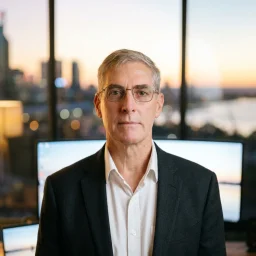
Perth and Joburg. Why two studios in the southern hemisphere.
The studio is in two cities, six hours apart, in the same time zone band. The geography is part of the proposition.

Perth and Joburg are unusual places to operate a studio. Not because they lack creative infrastructure or technical talent, but because neither appears in the standard account of where AI work happens. The centres of gravity for AI in 2026 are San Francisco, London, New York, Tel Aviv, Singapore. The funding announcements come from those cities. The conference circuits run through them.
Perth and Joburg are not those cities. That is not a problem to solve. It is a choice with consequences the studio considers advantages.
The geography
Perth is on the west coast of Australia. Will is in Johannesburg, South Africa. The two cities are roughly 9,000 kilometres apart. The time zone gap is approximately six hours, depending on the season. Perversely, given the distance, the two cities sit in a compatible time zone band. Both operate in the UTC+2 to UTC+8 range, which means overlap during working hours is achievable in a way it would not be for a studio split between Sydney and London, or between Perth and the US West Coast.
Two cities, six hours apart, in the same time zone band. That is the operating model. Will is in Joburg at the start of his day while Dave is midway through the Perth afternoon. The overlap window is approximately two to four hours depending on the season. Within that window, the studio operates synchronously. Outside it, the two work in the same direction on different time shifts.
The arrangement has practical consequences. Code that Dave commits in Perth in the early morning is reviewed by Will in Joburg later that morning. Design assets that Will produces in Joburg on a Tuesday afternoon are in Dave's queue before the Perth working day ends. The six-hour gap functions as a handoff interval rather than a communication barrier.
Two cities, six hours apart, in the same time zone band. The distance is the operating model, not the obstacle.
The southern hemisphere position
Both cities are in the southern hemisphere. This matters because the clients the studio is building for are predominantly in Australia: mid-market businesses in sectors like mining, construction, health and aged care, infrastructure, and industrial services. Perth is the city closest to those markets by time zone and sector alignment. Much of Australia's resource sector and industrial economy is managed from Perth. The studio's closest physical presence to its core market is Dave's presence in Perth.
The Joburg side operates at greater distance from Australian clients but within a time zone band that allows real-time conversation with Perth and near-synchronous communication with the Australian east coast. For clients, the studio reads as a Perth-based operation. The distributed reality behind that is an operational choice, not a disclosed surprise.
Operating from two southern hemisphere cities rather than from a European or North American hub changes the work in ways that are harder to name precisely but are real. The design sensibility is different when the context is Perth's specific building and industrial environment, or Joburg's particular urban infrastructure pressures. The AI co-workers the studio builds are aimed at sectors and scales that are present in Australia and southern Africa, not the sectors that dominate San Francisco's AI conversation.
What two cities produces
The two-city model produces things a single-city studio would not. The time zone gap creates a forcing function for documentation: work cannot be handed off verbally across six hours, so it has to be written down. Written documentation is searchable, auditable, and carries the decision rationale in a way that verbal handoffs do not. The studio's output is better documented than a co-located team's output would typically be, because documentation is the handoff mechanism, not an afterthought.

The distance also produces a specific quality of disagreement. When two founders are in the same room, disagreements get resolved in conversation and the reasoning disappears with the conversation. When a disagreement is documented in writing across a six-hour gap, the reasoning stays visible. The decisions are more traceable, which matters when the studio is making decisions about products other people will use.
What the distance produces is documentation. Documentation is searchable, auditable, and carries the reasoning that verbal handoffs do not.
Why the southern hemisphere
There is a version of this essay that is defensive: Perth and Joburg are not the obvious locations, and here is why the studio is there anyway. That is not the right frame.
The right frame is that the studio is building AI co-workers for the Australian mid-market, and the Australian mid-market is not in San Francisco. The clients in mining, construction, and industrial services operate out of Perth. The AI companions for Australian households are used in Australian households. Building those products from inside the market is a design input, not a disadvantage.
The southern hemisphere is not a brand position. It is the actual location. Perth and Joburg are the two cities because Dave is in Perth and Will is in Joburg, and the studio was built around that reality rather than despite it. The consequence is a studio that builds for the markets it knows, with two founders who have distinct views of what those markets need, separated by enough distance that the views have to be argued rather than assumed.
Both cities are present. That is the proposition.
Perth in the context of the Australian mid-market
Perth's position in the studio is not arbitrary. It is specific to the market the studio is building for.
The AU mid-market in the sectors the co-worker line serves, mining, construction, civil infrastructure, industrial services, is concentrated in Western Australia and in the capital cities of the eastern seaboard. The WA resource sector alone accounts for a substantial portion of Australia's mining and resources GDP. Most of the large mining operators, the mid-sized contractors, and the industrial services companies that serve them have operations, head offices, or procurement functions in Perth or in regional WA.
Dave's presence in Perth is not incidental. The studio is building AI co-workers for the sectors that are most present in the city where Dave works. The conversations he has about what those sectors need, the understanding of how mining companies and construction contractors actually operate at the operational level, the vocabulary of the work as it is done in WA conditions: these are inputs to the product that come from being in the market rather than at a distance from it.
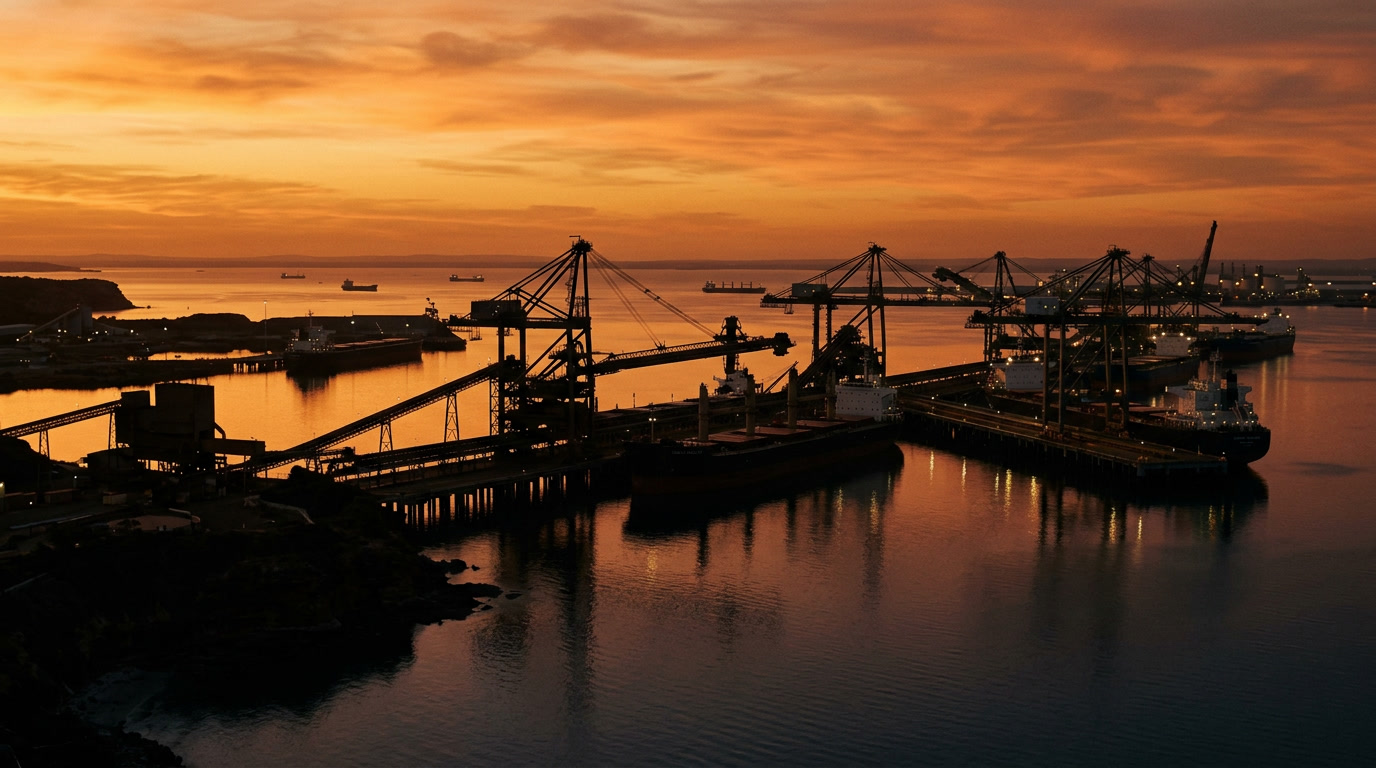
Perth's isolation from the eastern seaboard is a different kind of advantage than the studio's marketing materials acknowledge. Perth is genuinely distant from Sydney and Melbourne, not only geographically but culturally. The AI conversation in Australia tends to happen in Sydney and Melbourne, in the venture and finance and media contexts that those cities support. Perth's AI conversation is more often an engineering and operational conversation: what does this technology do in a resource or industrial context, and how does it get deployed in an environment that does not have the support infrastructure that a Sydney tech company would assume?
That question is the one the studio's co-workers are built to answer. Being in Perth means being in the market that asks it.
Perth is not the obvious place to build an AI studio. That is, in part, why it is the right place to build this one.
The AU mid-market also trusts proximity in ways the enterprise market does not need to. A mid-market operator in WA mining or civil construction wants to work with people who understand their context: the regulatory environment, the scale of the operation, the specific constraints of work done at distance from the major service centres. Dave in Perth is not the same as Dave in Sydney claiming to know the WA mid-market. The proximity is part of the product.
Joburg in the context of the studio
Will's position in Johannesburg situates the studio in a different context: the South African economic environment, where the gap between the technology available and the technology deployed in the mainstream economy is large, and where the mid-market has a different relationship with AI adoption than the AU mid-market does.
The comparison is useful. South Africa's mid-market has many of the same structural characteristics as Australia's: large, complex operational businesses in mining, construction, manufacturing, and services, operating without the data infrastructure or the AI capability that the enterprise tier assumes. The challenges of building AI that works in that environment, specifically rather than generically, have informed the studio's view of what AU mid-market clients actually need.
Joburg is not the studio's primary market. The studio builds for Australia. But Will's view of what a mid-market in resource and industrial sectors needs from AI tools is informed by the South African context he works in, which sharpens the specificity of the co-workers the studio builds. The sectors are different. The structural gap between what is available and what actually fits the context is similar.
Joburg also contributes something specific to the studio's creative output. The visual and verbal sensibility that Joburg's design culture produces is different from Perth's. The combination of two cities with distinct aesthetic and cultural contexts creates a studio whose work does not map neatly onto either Australian or South African visual conventions. That combination is part of what makes the studio's creative output legible globally rather than locally specific.
The quality of decisions made at distance
The essay mentions briefly that two-city operations produce better-documented decision rationale. The mechanism is worth explaining in more detail.
When two founders are in the same room, disagreements get resolved in conversation. The reasoning process is verbal. It disappears with the conversation. Six months later, when the decision is revisited, neither founder can reconstruct exactly why the choice was made. The decision is remembered but not its reasoning.
When two founders are six hours apart, the conversation about a significant decision happens in writing: in a shared document, a message thread, a brief note attached to the design file or the code commit. The reasoning is captured not as a formal record but as the natural artifact of a conversation that had to happen asynchronously. The reasoning is searchable because it exists.
This changes the quality of the studio's revision process. When a co-worker's output is reviewed eight months after the original brief was written, the brief's reasoning is available. When a design decision is questioned in a client conversation, the discussion that led to it is recoverable. The documentation is not a bureaucratic process. It is the natural output of working across a time zone gap that requires writing rather than speaking.
The founder who disagrees with a decision made six months ago by the other founder can disagree with the reasoning that was captured, not with a memory. The disagreement is more precise. The revision decision is more informed.
The time zone gap produces documentation. Documentation produces traceable reasoning. Traceable reasoning produces better revision decisions.
What the geography means for the products
The studio's geography is not separate from the products it builds. It is part of the design input.
The AI co-workers the studio has built are built for the AU mid-market in sectors where physical location and operational context matter. Mining operations in WA. Civil construction across the east coast. Health and aged care in Australian states with specific regulatory frameworks. The co-workers are not built from a generic understanding of these sectors. They are built by a studio with one founder in the capital city of the primary market, with a working knowledge of the sectors' operational contexts that comes from proximity.
The companions Deme and Sofia are built for Australian households. The seasonal calendar Deme knows runs opposite to the northern hemisphere calendar that dominates the internet. The knowledge is calibrated to the climate zones that Australian gardeners actually work in. The household rhythms Sofia understands are the rhythms of Australian households, not generic English-speaking households. The geographic specificity is in the product.
The geography is not a marketing story about authenticity. It is a description of how the design input for the products is collected, and from where. Perth and Joburg are where the design knowledge comes from. The products are specific because the geography is specific.
The AI conversation in the southern hemisphere
The AI conversation as it happens in 2026 is primarily a northern hemisphere conversation. The major models are built in San Francisco. The major venture activity is in the US, UK, and Israel. The conferences that define the category discourse happen in those cities. The case studies that circulate come from organisations that operate in those markets.
The southern hemisphere AI conversation is different in character. In Perth, the AI conversation is primarily about resource and industrial applications: how do you deploy AI in a mining environment, in a construction context, in the operational conditions of heavy industry? These are not the applications that generate conference keynotes. They are the applications that generate ROI in sectors that most AI product teams have not thought carefully about.
In Joburg, the AI conversation is different again: about the gap between developed-market AI assumptions and the infrastructure realities of a middle-income emerging market, about what AI deployment looks like when you cannot assume the data maturity or the support infrastructure that AU or US enterprise AI vendors take as baseline.
Neither of these conversations is the conversation most AI founders are having. Both of them are the conversations that inform the products the studio builds.
The studio is not in the southern hemisphere despite the AI conversation being elsewhere. It is in the southern hemisphere because the products it builds require design knowledge that comes from being in the markets they serve. If the market were London's financial sector or San Francisco's tech industry, the studio would need to be in those cities. The market is the AU mid-market in resources, construction, and industrial services. The studio is in Perth.
The AI conversation is in the north. The AU mid-market is in the south. The studio is where the market is.
What being outside the centre produces
Centres of any conversation have gravity. They pull the people and ideas in the field toward the problems the centre considers important, the product forms the centre considers viable, the metrics the centre considers meaningful.
The centre of the AI conversation in 2026 is interested in: large language model benchmarks, synthetic data generation at scale, general intelligence, AI agents for knowledge work, AI for consumer applications, the enterprise software layer above foundation models. These are legitimate areas of work. They are not the problems the AU mid-market needs solved.
The AU mid-market needs: AI that operates in regulated environments without requiring data infrastructure the mid-market does not have. AI that produces specialist output for domains the foundation models cover superficially. AI that can be deployed in operational contexts at the scale and cost structure the mid-market can sustain. AI that holds a professional brief without requiring a dedicated AI team to maintain it.
These are different problems from the ones at the centre. Building solutions to them from inside the centre would require active resistance to the centre's assumptions about what AI should be and do. Building solutions to them from Perth is simpler: the centre's assumptions are not the ambient assumption here. The operational constraint is the ambient assumption. The product is designed for the operational constraint rather than for the conference keynote.
Both cities are present. The distance from the centre is part of why the work is specific. The geography is not a limitation on what the studio can produce. It is a design input into the products it builds.
The client relationship from two cities
Clients who work with the studio typically engage with Will or Dave directly, depending on the nature of the work. Strategy and product work comes through Will. Engineering and build work comes through Dave. The two cities are visible to clients who engage across both tracks, and invisible to clients who work primarily in one area.
The two-city operating model has never been a barrier to client engagement. The client in Perth does not experience the studio as split: Dave is there. The client in Sydney or Melbourne experiences the studio as Perth-based, with the timezone compatibility that entails. The client who needs both strategy and build experiences a handoff that is tight because the decision rationale is documented rather than verbal.
The two founders working in two cities also produces a client experience of redundancy. A project is never at risk if one founder is unavailable for a day. The six-hour gap means that while one city is unavailable, the other is working. It is not the same as 24-hour availability: both founders are available during the overlap window and sequentially across the day. But it is closer to continuous availability than a single-location studio provides.
Client work also benefits from the diversity of context that two cities produce. Will's view of a product challenge is informed by the Joburg design context: the specific constraints of operating in a market where generic assumptions fail. Dave's view is informed by the Perth engineering and resource-sector context. When both views are applied to a client problem, the resulting recommendation is more robust than one view alone. Not because disagreement is always productive, but because the two cities ask different questions of a product decision.
Perth and Joburg. The proposition is that both cities are present in every piece of work the studio produces. Not as a brand statement about global reach. As a description of what two specific founders in two specific cities bring to the work when they apply their context to every product decision together. That is what the studio plate means: Perth + Joburg. Both cities. Both contexts. One studio. The geography is the operating model, and the operating model is part of what makes the work specific. Specific work, made by people in specific places, for clients operating in specific contexts. That is the proposition the studio plate is shorthand for.